24. September 2025 · Uncategorized
Headless AI Explained: The Future of Flexible and Scalable AI
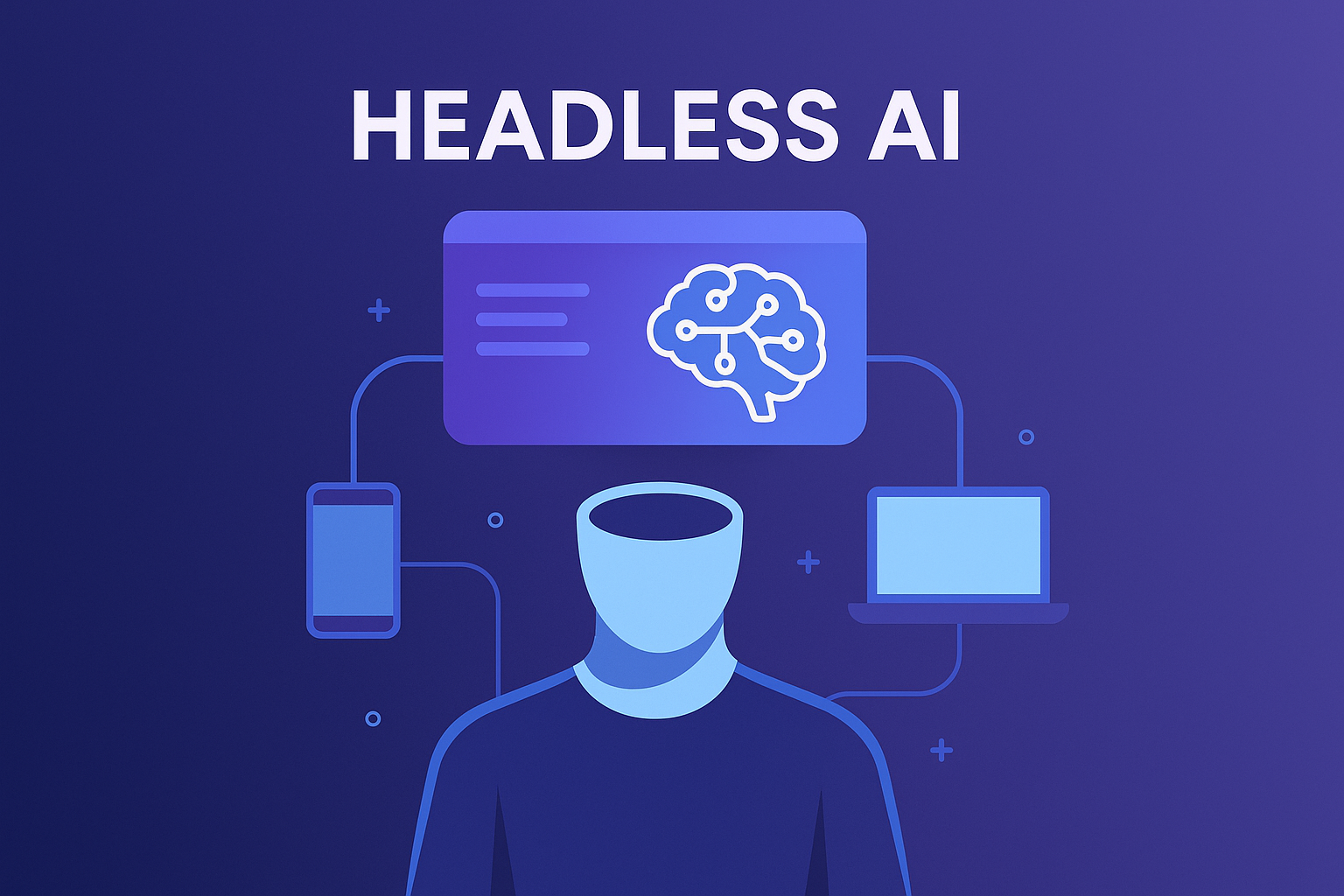
The term “headless” in technology refers to separating backend logic from frontend interfaces. Headless CMS and headless commerce follow this pattern. Headless AI applies the same principle to artificial intelligence – the AI models and decision-making logic operate independently from the user-facing layer.
Why does this matter? Traditional AI systems bundle the model, interface, and deployment environment together. If you want to change the interface or deploy the model in a different environment, you’re often rebuilding from scratch. Headless AI decouples these components, so the same AI model can power multiple interfaces – a web app, mobile app, API, or embedded system – without modification.
Headless AI Architecture: Flexibility Through Decoupling
Flexibility is the main advantage. A headless AI model can be integrated into any application that needs intelligent decision-making. For example, a recommendation engine could power product suggestions on your website, personalized emails, and in-app notifications – all using the same underlying model.
Scalability improves because you’re not constrained by a monolithic architecture. If demand spikes, you scale the AI backend independently from the frontend. If you need to update the model, you do so without touching the user interface. This separation reduces complexity and speeds up development.
AI Integration: Challenges and Considerations
Headless AI also enables multi-channel experiences. A customer might start an interaction on your website, continue via mobile app, and finish through a voice assistant. With headless architecture, the AI maintains context across all channels because it’s not tied to any single interface.
But headless AI isn’t without challenges. Managing the integration between AI backend and multiple frontends requires strong API design and monitoring. If the AI service goes down, all interfaces relying on it fail. Robust error handling and fallback mechanisms are essential.
Headless AI represents a shift toward modular, flexible AI systems. For companies that need to deploy AI across multiple channels or iterate quickly, it’s a compelling approach.